 Aniruddh Sharma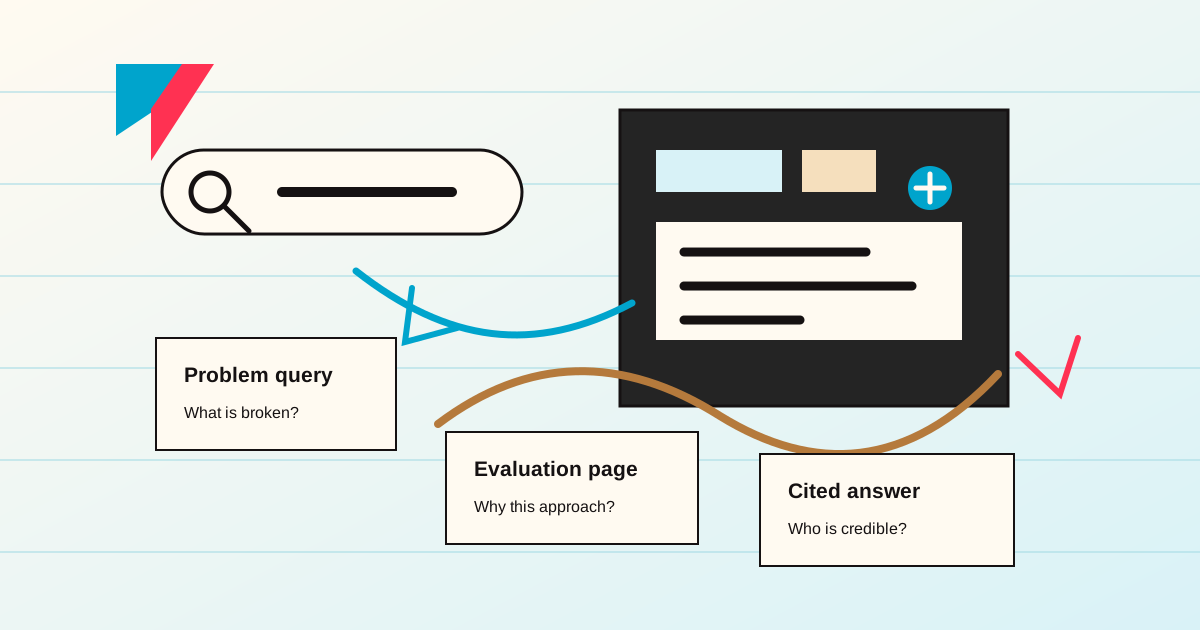
Traffic can hide a weak search strategy
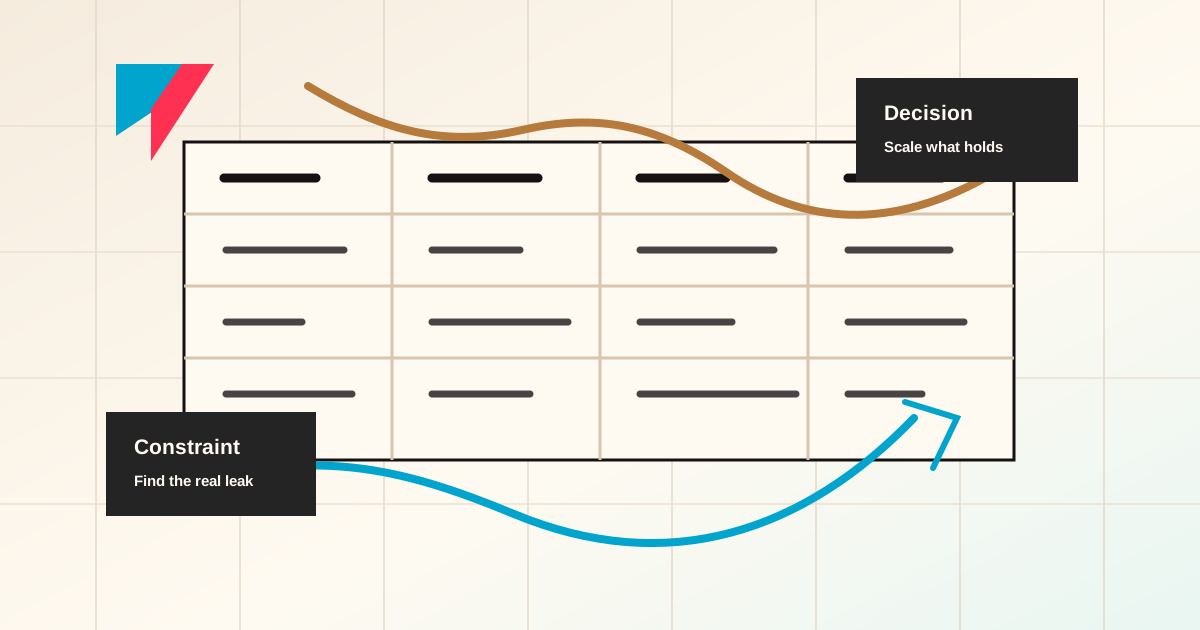
SEO can look successful while pipeline barely moves. Rankings improve, sessions grow, impressions climb, and the content calendar looks productive. But the sales team does not hear better questions. Demo requests do not improve. The pages closest to purchase still feel thin.
That usually means the SEO program is rewarding volume instead of buyer momentum. The site is answering broad questions from a large audience while missing the searches that happen when buyers are evaluating risk, alternatives, integrations, pricing, implementation, and proof.
Traffic is not useless. It is just incomplete. A page that attracts the wrong visitor, answers the wrong question, or ends without a useful next step creates visibility without progress.
B2B SaaS buyers do not search in a straight line
Buyers rarely begin with the exact category phrase your team wants to rank for. They often start with symptoms: why leads are low quality, why attribution is unreliable, why implementation is slow, why reporting does not match sales reality. Then they move into categories, approaches, comparisons, tools, integrations, pricing expectations, migration risks, and proof.
A serious SaaS SEO strategy supports that whole path. It does not rely only on top-of-funnel definitions or broad educational posts. It builds pages for the moments when the buyer is trying to reduce uncertainty.
High-volume keywords are not always high-value keywords
The best topics are often not the largest keywords. A low-volume comparison query can be more commercially useful than a broad definition keyword. A use-case page may convert fewer visitors but give sales better context. An integration page may attract a smaller audience with much higher urgency.
Before prioritizing a topic, ask four questions. Does the searcher have a real business problem? Can your company or service credibly help? Does the topic create a useful next step? Can the page build trust better than a generic article?
Build around buyer stages, not blog volume
A useful content architecture has different jobs for different stages of the journey.
- Problem-aware pages: explain symptoms, consequences, and diagnostic questions.
- Solution-aware pages: define approaches, tradeoffs, selection criteria, and implementation concerns.
- Vendor-aware pages: handle comparisons, objections, proof, pricing expectations, and risk.
- Action-ready pages: move the reader toward a diagnostic, service page, demo, audit, or consultation.
If the site only publishes broad articles, it may win awareness while losing evaluation. If it only publishes sales pages, it may miss buyers who are still trying to name the problem. The architecture has to connect both.
Conversion design matters as much as ranking
A good SEO page should not end with a vague contact button. It should guide the reader to the next useful action: a related service page, a diagnostic checklist, a comparison page, an author point of view, or a contact route that matches the reader's stage.
Internal links should feel like a buying path, not a content maze. A reader who lands on a problem article should naturally find the related solution page. A reader on a comparison page should find proof. A reader with urgency should find the right way to talk to someone.
AI search raises the quality bar
AI search and answer engines reward clarity, entity strength, author credibility, structured data, direct answers, and pages that deserve to be associated with a topic. Thin articles written only to occupy keywords will struggle.
This does not mean every article needs to be long. It means the page needs to be useful enough to earn trust. Specific examples, clear definitions, expert judgment, original framing, and strong internal context matter more than a keyword repeated in the right places.
What qualified demand SEO measures
Rankings and traffic still matter, but they are not the final score. Track assisted conversions, high-intent page engagement, internal click paths to service or demo pages, branded search lift, sales questions influenced by content, comparison-page performance, and pipeline from organic where attribution is reliable.
The goal is not to publish more pages. The goal is to become easier to find at the exact moments buyers are trying to reduce uncertainty and decide who is worth trusting.