Site structure, product pages, use cases, comparisons, integrations, hubs, and internal links
Information Architecture for SaaS SEO
Many SaaS sites have the right ingredients but a weak map. Product pages, use cases, comparisons, integrations, resources, and blog content exist in separate corners, so buyers and crawlers struggle to understand what matters. Growth Fisher rebuilds the information architecture so search engines can find the important pages, buyers can follow the logic, and internal authority flows toward the pages that can create demand.
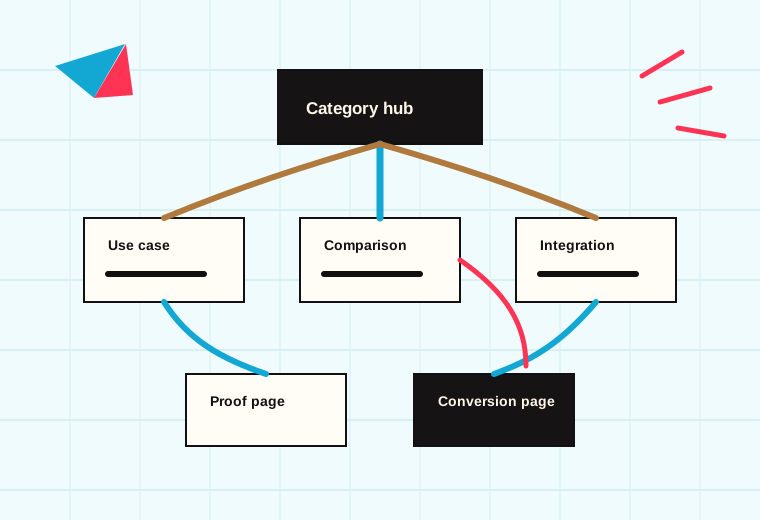
Work connected across the systems that shape this outcome
Information architecture diagnostic
Find the structural gaps that keep priority pages from compounding.
The diagnostic reviews navigation, page hierarchy, crawl depth, URL structure, hubs, templates, internal links, orphan pages, and buyer paths.
Discoverability
Can crawlers and users find the pages that matter within a reasonable path from important hubs?
Hierarchy
Do product, use case, comparison, integration, and resource pages have a clear relationship?
Link context
Do internal links explain why the next page is useful, or are they generic and scattered?
Where we usually begin
SaaS SEO stalls when buyers and crawlers cannot understand how the site is organized.
Important pages sit too deep in the site.
Product, use-case, integration, comparison, and commercial pages exist, but weak linking makes them feel unimportant.
Blog content does not support commercial pages.
Articles collect traffic without passing context, authority, or next-step intent to product and evaluation pages.
Navigation reflects internal teams, not buyer logic.
Site menus, hubs, and URL paths make sense internally but do not match how buyers understand the category.
Templates create duplication and cannibalization.
Use-case, feature, industry, integration, and resource templates repeat similar copy without clear hierarchy.
Architecture blueprint
We organize the site around how buyers evaluate and how search engines discover importance.
Information architecture connects navigation, URL patterns, page types, hubs, internal links, and content hierarchy so search equity and buyer attention move toward the right pages.
What we audit
Site structure and crawl paths
Navigation, URL patterns, depth, hubs, sitemaps, orphan pages, and how crawlers discover priority pages.
Page-type relationships
Product, feature, use case, industry, comparison, alternative, integration, resource, and blog page hierarchy.
Internal links and templates
Anchor context, link placement, content hubs, template duplication, cannibalization, and scale rules.
What we fix
Rebuild the site map around buyer logic
Clarify how product, use case, comparison, integration, and resource pages relate to each other.
Move authority toward priority pages
Improve internal links, hubs, anchors, navigation, breadcrumbs, and contextual paths.
Create rules for scalable page types
Define when a page deserves to exist, how templates differ, and how new pages enter the architecture.
What the client receives
A SaaS site architecture that makes priority pages easier to find, understand, and rank.
You get a clear architecture map, internal-link plan, page hierarchy, consolidation recommendations, and template rules.
Architecture map
A practical view of current and recommended page hierarchy, hubs, navigation, and URL relationships.
Internal linking plan
Priority link paths, anchors, hub connections, breadcrumbs, and page-level context improvements.
Template and consolidation rules
Which pages to keep, merge, rewrite, remove, or create, plus rules for future scale.
Scope
What we actually look at
The exact scope depends on the constraint, but this service usually covers these parts of the growth system.
Timeline
What the first 4-6 weeks look like
Week 1
Crawl, sitemap, navigation, URL, internal link, Search Console, and page-type inventory.
Weeks 2-3
Hierarchy map, buyer path review, page-type rules, cannibalization findings, and link opportunities.
Weeks 4-6
Internal-link implementation, template guidance, consolidation support, and follow-up crawl review.
Fit check
When this is worth doing, and when it is not.
Worth a conversation
- Your site has useful content, but priority pages are hard to find or explain.
- You have many use-case, feature, industry, comparison, or integration pages that overlap.
- Organic growth is constrained by crawl depth, weak internal links, or confusing content hierarchy.
Probably not the fix
- You only need metadata edits or isolated title tag changes.
- The site cannot change navigation, templates, internal links, or page structure.
- You want to create many new pages before organizing the pages that already exist.
Information Architecture review
Want to know whether your site structure is holding organic growth back?
Share the sitemap, priority products, key page types, recent crawl concerns, and where buyers seem to get lost.