Messaging, offers, forms, and conversion paths
Landing Page and Funnel Conversion
A landing page is not a design asset. It is where channel intent, buyer anxiety, proof, offer, form friction, and next-step clarity collide. Growth Fisher rebuilds conversion paths so qualified visitors understand why to act, what happens next, and whether the offer is worth their time.
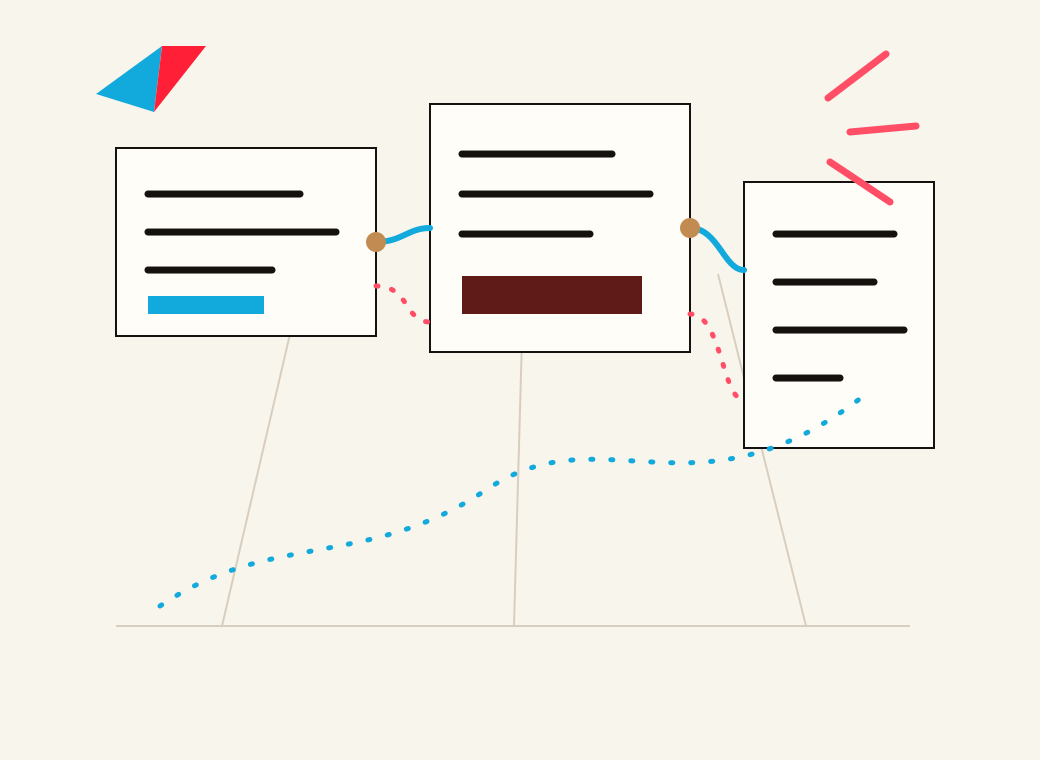
Work connected across the systems that shape this outcome
Conversion diagnostic
Separate traffic problems from page problems.
The diagnostic shows whether conversion is blocked by poor intent, unclear messaging, weak proof, form friction, or a next step that does not match buyer readiness.
Arrival intent
Channel, query, campaign promise, visitor stage, and page expectation.
Page persuasion
Headline, proof, objections, offer, information order, and clarity of next step.
Lead quality
Form answers, qualification logic, sales context, and post-submit routing.
Where we usually begin
Most pages ask buyers to do too much translation.
The page explains the product before the problem.
Buyers arrive with a specific risk or job to resolve. Generic feature messaging makes them work to find relevance.
The offer attracts curiosity, not commitment.
A soft CTA can create volume while filtering out the urgency sales needs for a real conversation.
Forms either ask too much or learn too little.
Bad forms create friction without adding qualification, or reduce friction while removing useful context.
Testing is reduced to surface changes.
Button colors and small layout changes rarely fix unclear promise, weak proof, or mismatched intent.
Conversion system view
We rebuild pages around the buyer's reason to keep going.
Conversion improves when the page reflects where the visitor came from, what problem they are trying to solve, what proof they need, and what action is reasonable at that moment.
What we audit
Arrival intent
Where visitors came from, what promise they clicked, what they expect to see, and how ready they are to act.
Page argument
Headline, problem framing, offer, proof, objections, sequence, friction, and whether the page answers the buyer's real doubt.
Form and follow-up path
Form fields, qualification logic, thank-you page, routing, sales context, and whether the next step preserves momentum.
What we fix
Rewrite the first-screen promise
Make the page immediately reflect the channel, query, audience, and buying trigger that brought the visitor there.
Rebuild proof around buyer doubt
Place proof, specifics, objections, and fit signals where the buyer needs confidence, not in generic sections.
Improve conversion quality
Adjust forms, CTAs, routing, and follow-up context so the conversion creates a useful sales conversation.
What the client receives
A page argument and test plan tied to lead quality.
You get a practical view of why qualified visitors hesitate, what to change on the page, and how to test for better conversations.
Page teardown
A structured review of message fit, proof gaps, offer friction, form quality, and next-step clarity.
Rewritten page structure
A practical wireframe and copy direction for the landing page or template that deserves the next test.
Conversion test plan
Tests ranked by expected impact on qualified conversions, not button-color preference.
Scope
What we actually look at
The exact scope depends on the constraint, but this service usually covers these parts of the growth system.
Timeline
What the first 4-6 weeks look like
Week 1
Channel intent, page review, form review, heatmap/session sample, CRM feedback, and first-page diagnosis.
Weeks 2-3
Messaging rewrite, proof placement, form/CTA changes, and new landing-page structure.
Weeks 4-6
Launch support, conversion-quality review, test plan, and next-page prioritization.
Fit check
When this is worth doing, and when it is not.
Worth a conversation
- You have traffic, but the page is doing too much explanation too late.
- Paid and organic visitors are landing on the same generic page.
- You need better conversion quality before increasing traffic.
Probably not the fix
- You want cosmetic design changes without changing the argument.
- Traffic quality is unknown and cannot be reviewed.
- No one can provide sales feedback on lead quality.
CRO review
Want to know why qualified visitors are not taking the next step?
Share the landing page, traffic source, form, and what sales says about the leads that do convert.