Crawlability, indexation, JavaScript rendering, IA, and migrations
Technical SEO for SaaS
Technical SEO is not a checklist of missing tags. For SaaS sites, the real issues usually sit in JavaScript rendering, app and marketing-site separation, template bloat, internal-link depth, indexation waste, migration risk, duplicate content, and architecture that hides commercial pages. Growth Fisher turns technical fixes into organic growth priorities.
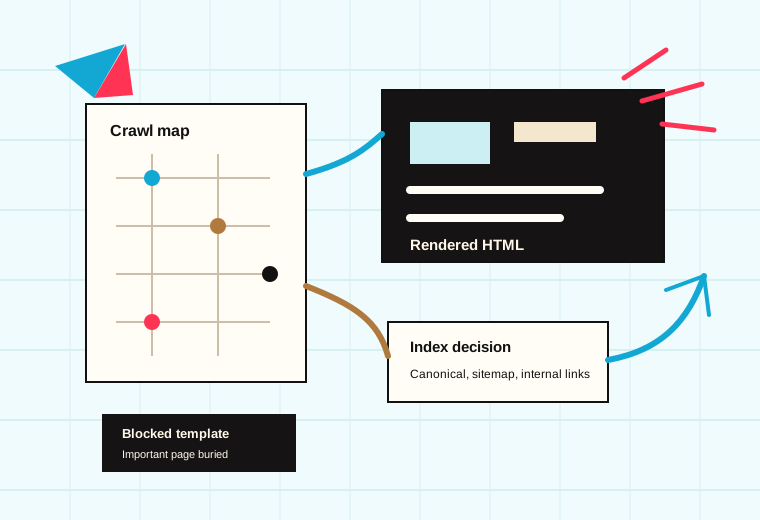
Work connected across the systems that shape this outcome
Technical SEO diagnostic
Find the technical constraints that are actually limiting organic growth.
The diagnostic reviews crawl paths, rendering, indexation, canonicalization, redirects, templates, internal links, information architecture, migration risk, and page-level search value.
Crawl and render
Crawler access, JavaScript rendering, blocked resources, page states, and whether important content appears reliably.
Index quality
Sitemaps, canonicals, redirects, thin pages, duplicate pages, parameters, faceted URLs, and old content.
Architecture and authority flow
Internal links, hub structure, depth, templates, subdomains, migrations, schema, and commercial-page prominence.
Where we usually begin
Technical SEO matters most when it blocks important pages from being found, understood, or trusted.
Priority pages are crawlable in theory but buried in practice.
The page exists, but weak internal links, poor information architecture, or template depth keeps it from becoming important.
JavaScript delays or hides the content that matters.
Search engines may need extra rendering steps before they can see the copy, links, schema, or page state buyers rely on.
The index is full of pages that do not deserve crawl budget.
Thin, duplicate, parameterized, old, or low-value pages compete with the pages that should rank.
Migrations and subdomains leak authority silently.
App splits, redirects, canonicals, localization, and site rebuilds can weaken search performance long before anyone sees the drop.
Technical growth system
We prioritize technical fixes by search impact, not checklist length.
A technical audit becomes useful when it explains which issues suppress demand capture, which fixes are urgent, and which items are hygiene work that can wait.
What we audit
Crawl and rendering reality
Crawler access, JavaScript rendering, HTML output, blocked resources, page states, and server response behavior.
Indexation and URL control
Sitemaps, robots, canonicals, redirects, parameter URLs, faceted navigation, duplicate pages, thin pages, and obsolete content.
Architecture and migration risk
Internal links, site depth, hub structure, templates, subdomains, schema, localization, and planned platform changes.
What we fix
Make priority pages easier to discover
Improve internal links, hubs, navigation, sitemap signals, and template logic so important pages are not buried.
Clean the index
Remove or consolidate thin, duplicate, parameterized, stale, and low-value URLs that waste crawl attention.
Reduce rendering and migration risk
Fix JavaScript SEO issues, redirects, canonicals, structured data, subdomain splits, and launch plans before they cause loss.
What the client receives
A technical SEO plan engineering, content, and leadership can actually use.
You get a prioritized view of the technical constraints, the business risk behind each one, and the implementation order that protects organic growth.
Technical SEO priority map
A ranked list of crawl, rendering, indexation, IA, template, and migration issues with business impact.
Implementation-ready fixes
Developer-readable recommendations for redirects, canonicals, internal links, templates, sitemaps, robots, schema, and rendering.
Measurement and release checks
Search Console, crawl, analytics, and QA checks to confirm fixes worked and releases did not create regressions.
Scope
What we actually look at
The exact scope depends on the constraint, but this service usually covers these parts of the growth system.
Timeline
What the first 4-6 weeks look like
Week 1
Crawl, Search Console review, sitemap and robots review, rendering checks, analytics scan, and issue clustering.
Weeks 2-3
Indexation rules, IA review, internal-link priorities, template findings, and migration or subdomain risk map.
Weeks 4-6
Implementation support, QA checks, post-fix crawl review, Search Console monitoring, and next priority decisions.
Fit check
When this is worth doing, and when it is not.
Worth a conversation
- Organic traffic is flat or volatile and the content alone does not explain it.
- A redesign, migration, subdomain change, or CMS change is planned.
- Search Console shows indexing, crawl, rendering, or duplicate-content issues that are hard to prioritize.
Probably not the fix
- You want a generic technical audit with hundreds of unprioritized checks.
- Engineering access or implementation support is completely unavailable.
- The only goal is speed scores without reviewing crawl, rendering, indexation, or architecture.
Technical SEO review
Want to know which technical issues are actually suppressing organic growth?
Share the site, CMS or framework, Search Console concerns, recent launches, migration plans, and the pages that matter most commercially.