Audience quality, offer intent, creative, forms, and sales feedback
LinkedIn Ads for B2B SaaS
LinkedIn can reach the right accounts, but it can also become an expensive way to collect polite interest. Growth Fisher reviews audience design, offer intent, creative, landing pages, forms, CRM routing, and sales feedback so LinkedIn spend is judged by conversation quality instead of lead volume.
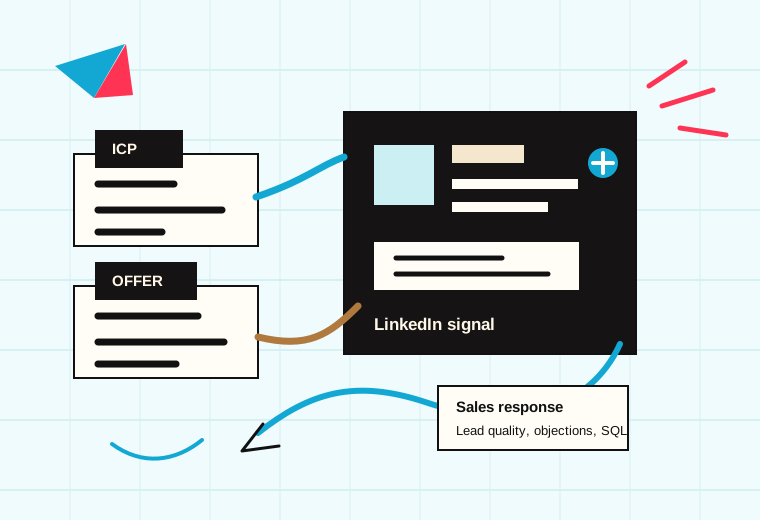
Work connected across the systems that shape this outcome
LinkedIn diagnostic
Find whether LinkedIn is buying intent, curiosity, or noise.
A LinkedIn program can look healthy while sales quietly stops trusting it. The diagnostic separates audience fit, offer strength, creative clarity, form quality, and downstream movement.
Audience and exclusions
Company size, industry, job function, seniority, account lists, exclusions, and overlap between prospecting and retargeting.
Offer and creative
Message angles, proof, CTA readiness, asset friction, and whether the offer earns the right kind of attention.
Post-submit path
Form fields, enrichment, CRM routing, sales context, response time, and lead-quality feedback.
Where we usually begin
LinkedIn Ads get expensive when the offer asks for more commitment than the buyer has.
The job titles look right. The reason to respond is thin.
Job titles and company filters can look precise while the offer still attracts people who are mildly curious, not seriously evaluating.
Lead gen forms create volume without context.
Native forms reduce friction, but they often hide the page, proof, and qualification signals sales needs.
Retargeting repeats the same vague promise.
Warm audiences see more impressions, but not a clearer reason to act or a better next step.
Sales cannot explain which leads were worth it.
Campaign reports stop at CPL while sales feedback sits in calls, notes, and disqualification reasons.
LinkedIn demand system
We turn LinkedIn from a lead source into a market-learning system.
The work is to learn which accounts, roles, triggers, messages, and offers create useful sales conversations. When that view is missing, the platform keeps optimizing for the easiest form fill.
What we audit
Audience architecture
Campaign structure, buying committee coverage, exclusions, account lists, retargeting pools, and audience overlap.
Offer and creative quality
The promise, proof, CTA, asset, ad format, message sequence, and whether each campaign matches buyer readiness.
Lead quality and handoff
Form design, enrichment, CRM routing, sales context, response timing, objections, and disqualification patterns.
What we fix
Separate account fit from engagement
Move budget toward audiences that sales can work and away from segments that only create cheap engagement.
Match offers to readiness
Use different asks for problem education, category evaluation, competitor comparison, and sales-ready demand.
Close the sales feedback loop
Bring call notes, disqualification reasons, and CRM movement back into campaign decisions.
What the client receives
A LinkedIn Ads program that knows what kind of demand it is buying.
You get a clear view of which audiences deserve budget, which offers need repair, and how LinkedIn should connect to sales follow-up.
LinkedIn account teardown
A structured review of campaign architecture, audiences, offers, creative, forms, retargeting, and exclusions.
Offer and audience map
A practical plan for what each buying role should see, why they should care, and what action fits their stage.
Lead-quality operating view
A reporting and feedback loop that connects spend to sales response, CRM movement, and disqualification reasons.
Scope
What we actually look at
The exact scope depends on the constraint, but this service usually covers these parts of the growth system.
Timeline
What the first 4-6 weeks look like
Week 1
Access, campaign review, audience map, form review, CRM sample, and sales-feedback scan.
Weeks 2-3
Audience cleanup, offer ladder, creative direction, form or landing-page routing, and reporting changes.
Weeks 4-6
Test review, budget movement, retargeting adjustment, and scale rules based on downstream lead quality.
Fit check
When this is worth doing, and when it is not.
Worth a conversation
- LinkedIn spend is active, but sales does not trust the leads.
- You have account lists, ICP clarity, or ABM motion that needs better paid support.
- You need to know whether the issue is audience, offer, form, landing page, or follow-up.
Probably not the fix
- You only want cheaper LinkedIn leads.
- Sales feedback and CRM access cannot be shared.
- The team is not willing to change the offer, form, landing page, or follow-up process.
LinkedIn Ads review
Want to know whether LinkedIn is creating sales-ready interest?
Share your active campaigns, audiences, offer, monthly spend range, and what sales says about LinkedIn leads.